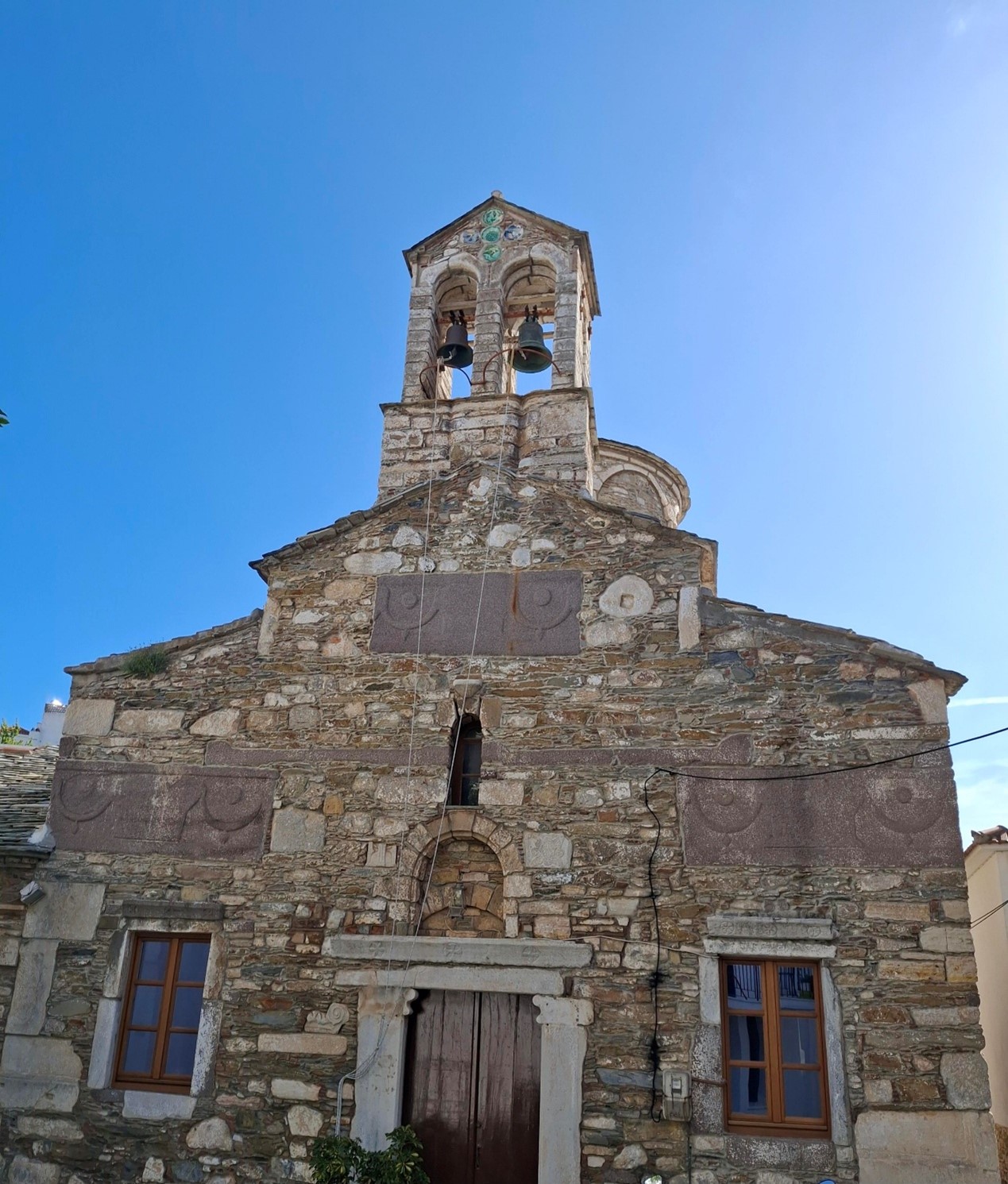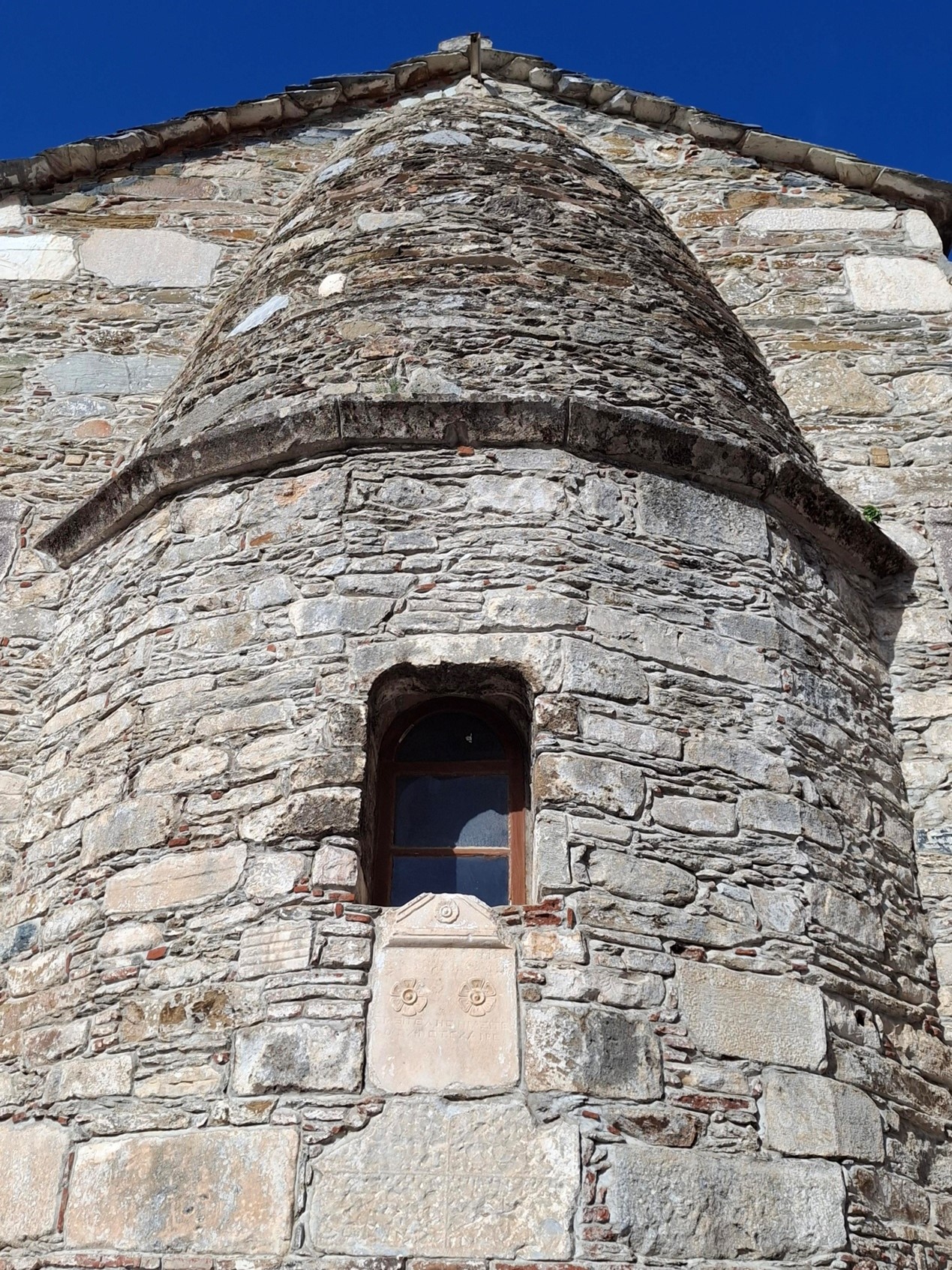
Ο ναός, κτίσμα του 17ου αιώνα, ανεγέρθει μετά από θαύμα, το 17ο αιώνα, στη θέση παλαιοχριστιανικού τύπου ναού. Είναι σύνθετος τετράκιονος με τρούλο και πολύ αρμονικές αναλογίες. Η κυλινδρική εξωτερική επιφάνεια του τυμπάνου έχει 8 τοξύλια, τα οποία στηρίζονται σε λεπτούς ημικιονίσκους. Η στέγη διαθέτει σχιστολιθικές πλάκες και οι πλευρές του είναι από ασβεστοκονίαμα. Η κόγχη του ιερού βήματος του ναού είναι αρμένικου τύπου. Εντός, υπάρχει και εντοιχισμένη επιγραφή του 2ου μ.Χ., γεγονός που μαρτυρεί την ύπαρξη παλαιοχριστιανικού ναού.
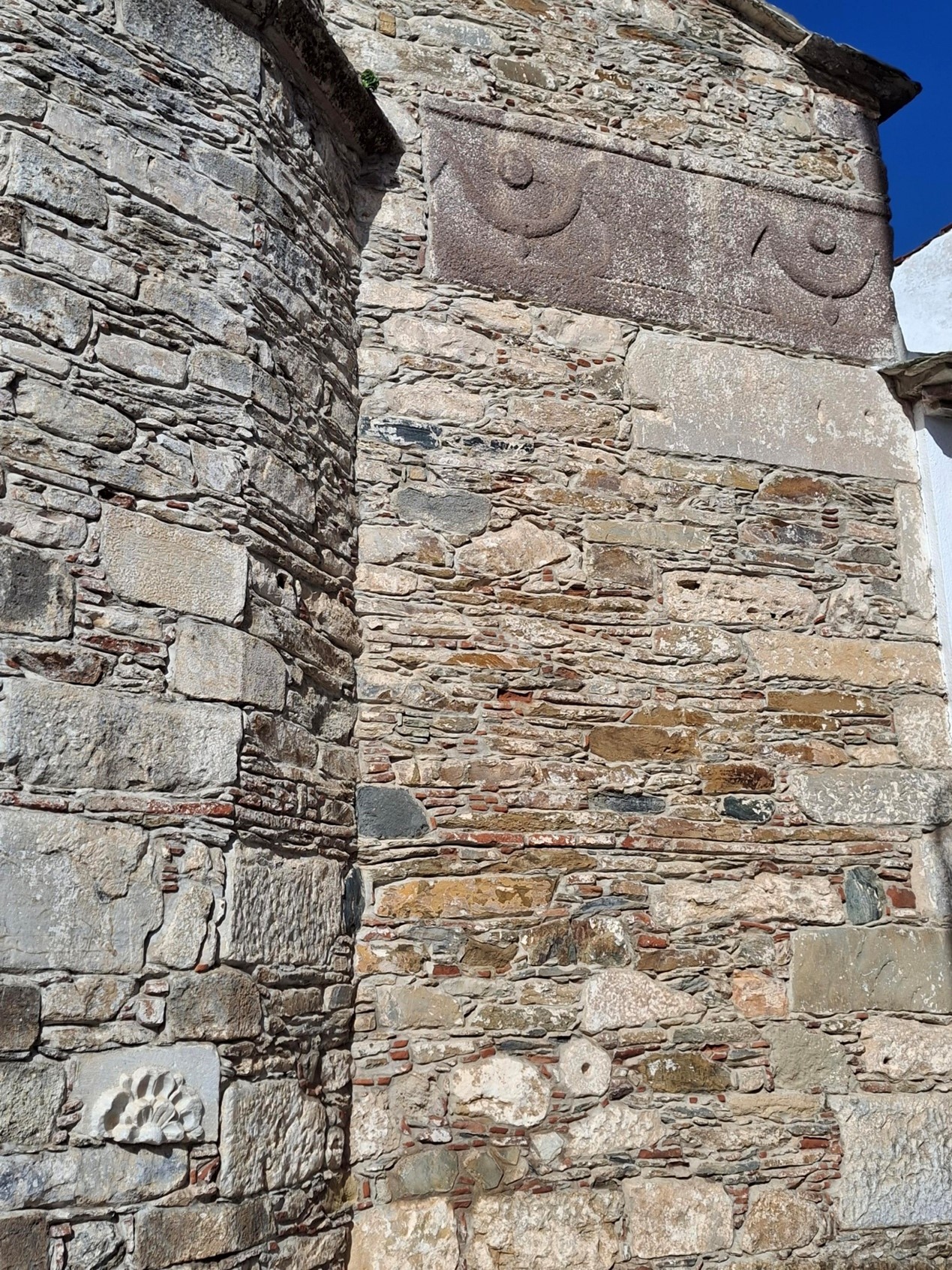
Το 17ο αιώνα ήταν μοναστήρι που κατέστη Σταυροπηγιακό. Στο εξωτερικό μέρος του ναού εντειχίστηκαν 5 ρωμαϊκές σαρκοφάγοι. Το εσωτερικό δάπεδο είναι στρωμένο από πλακίδια από σμάλτο, ενώ έχουν τοποθετηθεί και λεβητοειδή κιονόκρανα.
Το 1828 τελέστηκε εκεί η πρώτη δοξολογία για την έναρξη του Ελληνικού σχολείου της Σκοπέλου, το οποίο στεγάστηκε στο κτίριο που βρισκόταν δίπλα από το εκκλησάκι των Αγίων Πάντων (σημερινό καφέ Azores), που σήμερα έχει αλλάξει μορφή και χρήση. Αξίζει τέλος να σημειωθεί πως η συνοικία γύρω από τον Άγιο Μιχαήλ λεγόταν «αργυρομάχαιρα», διότι οι κάτοικοι της έφεραν στο ζωνάρι τους αργυρά (ασημένια) μαχαίρια.
Κείμενο: Ηρώ Μελαχροινάκη
Φωτογραφίες: Δήμος Σκοπέλου
Saint Michael, Bishop of Synada
This 17th-century church was built following a miracle, on the site of an earlier Early Christian basilica. It is a domed, four-column cruciform church (composite tetrakionion) with exceptionally harmonious proportions. The cylindrical outer surface of the dome drum features eight blind arches resting on slender semi-columns. The roof is covered with slate tiles, and the walls are finished with lime plaster. The sanctuary apse is of the Armenian type.
Inside the church, an inscribed stone from the 2nd century AD is embedded into the wall—evidence of the pre-existing Early Christian structure.
In the 17th century, the church functioned as a monastery and was granted stavropegial status (directly under the Patriarchate). Five Roman sarcophagi are embedded in its outer walls. The floor is paved with enamel tiles, and column capitals shaped like cauldrons (lebitoid) have been installed.
In 1828, the church hosted the first Doxology (thanksgiving service) marking the opening of the first Greek school in Skopelos. The school was housed in a building once located next to the chapel of All Saints (Agioi Pantes)—on the site of today’s Azores Café—which today has changed in form and function.
It is also worth noting that the neighborhood surrounding the church was once known as Argyromachaira (“Silver Daggers”), as its inhabitants traditionally wore silver knives on their belts.
Text: Iro Melachroinaki
Photos: Municipality of Skopelos