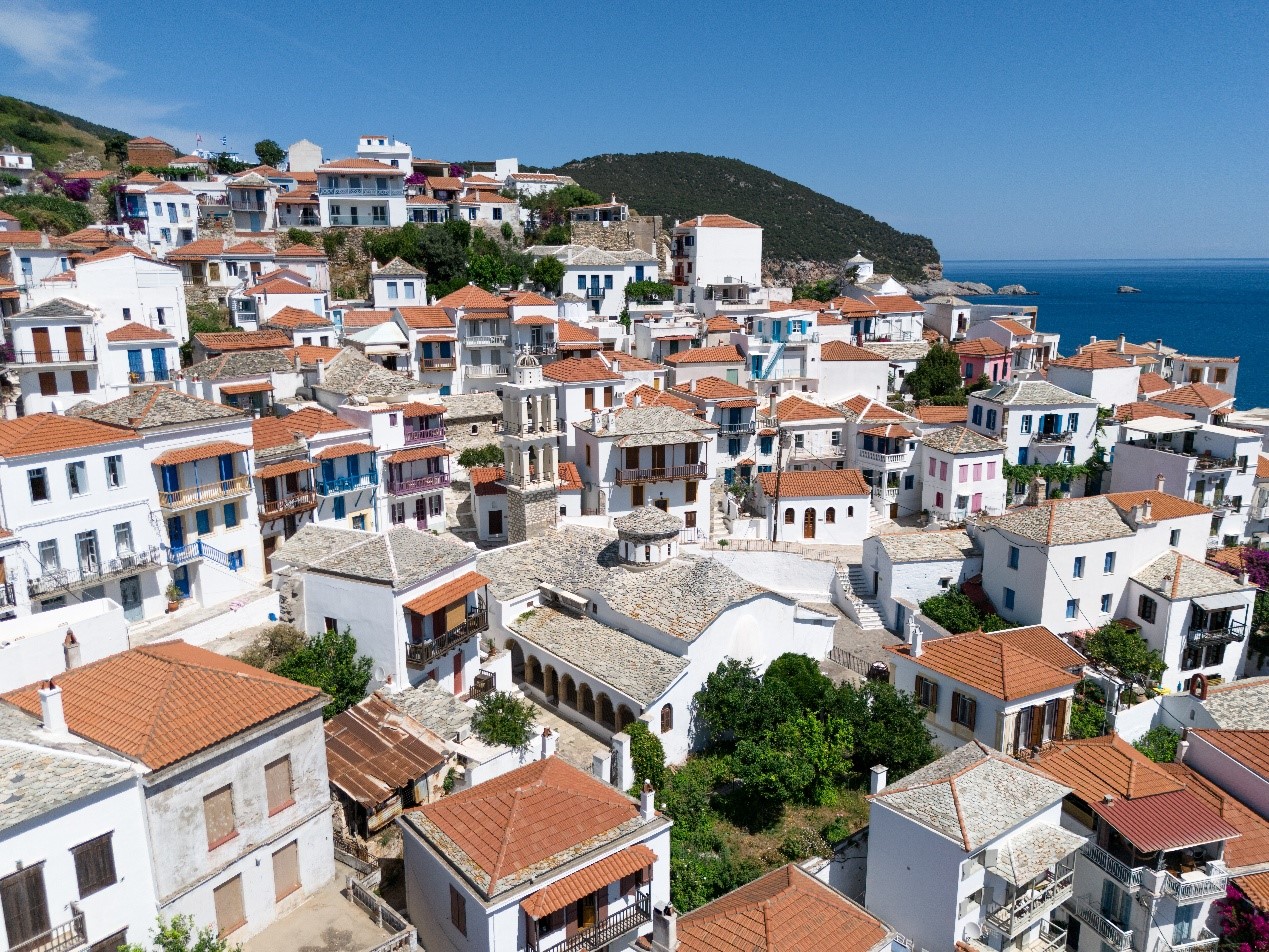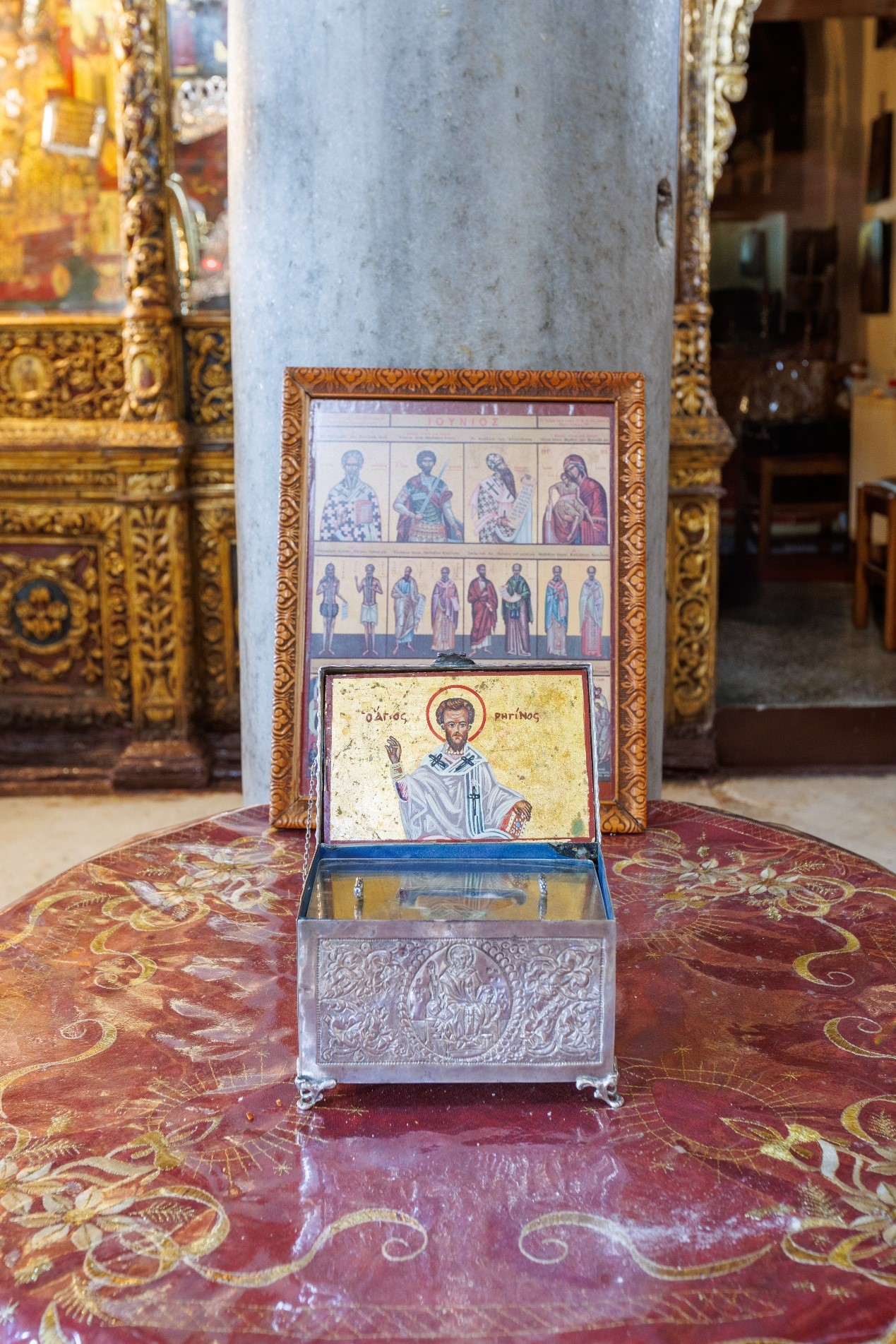
Η εκκλησία αποτελεί ενοριακό ναό, τον παλαιότερο της χώρας, ο οποίος οικοδομήθηκε πάνω σε αρχαιοελληνικό ναό. Ήταν έδρα Επισκοπής από τον 4ο αιώνα, την εποχή του πολιούχου του νησιού Αγίου Ρηγίνου, του οποίου το λείψανο φυλάσσεται στο ναό. Πάνω από την εκκλησία βρισκόταν το Επισκοπείο, η κατοικία δηλαδή του εκάστοτε Επισκόπου, το οποίο ενσωματώθηκε στο ναό και είναι ο σημερινός γυναικωνίτης.
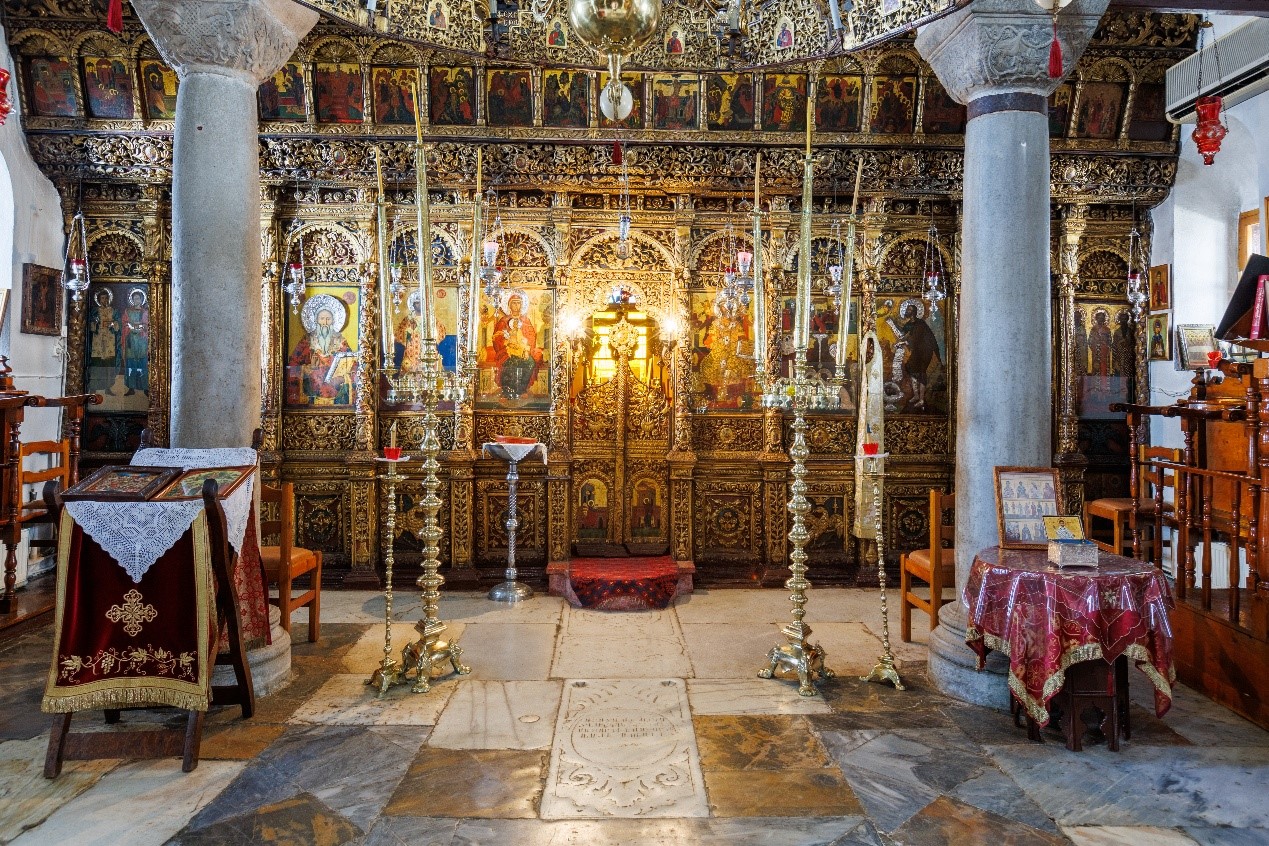
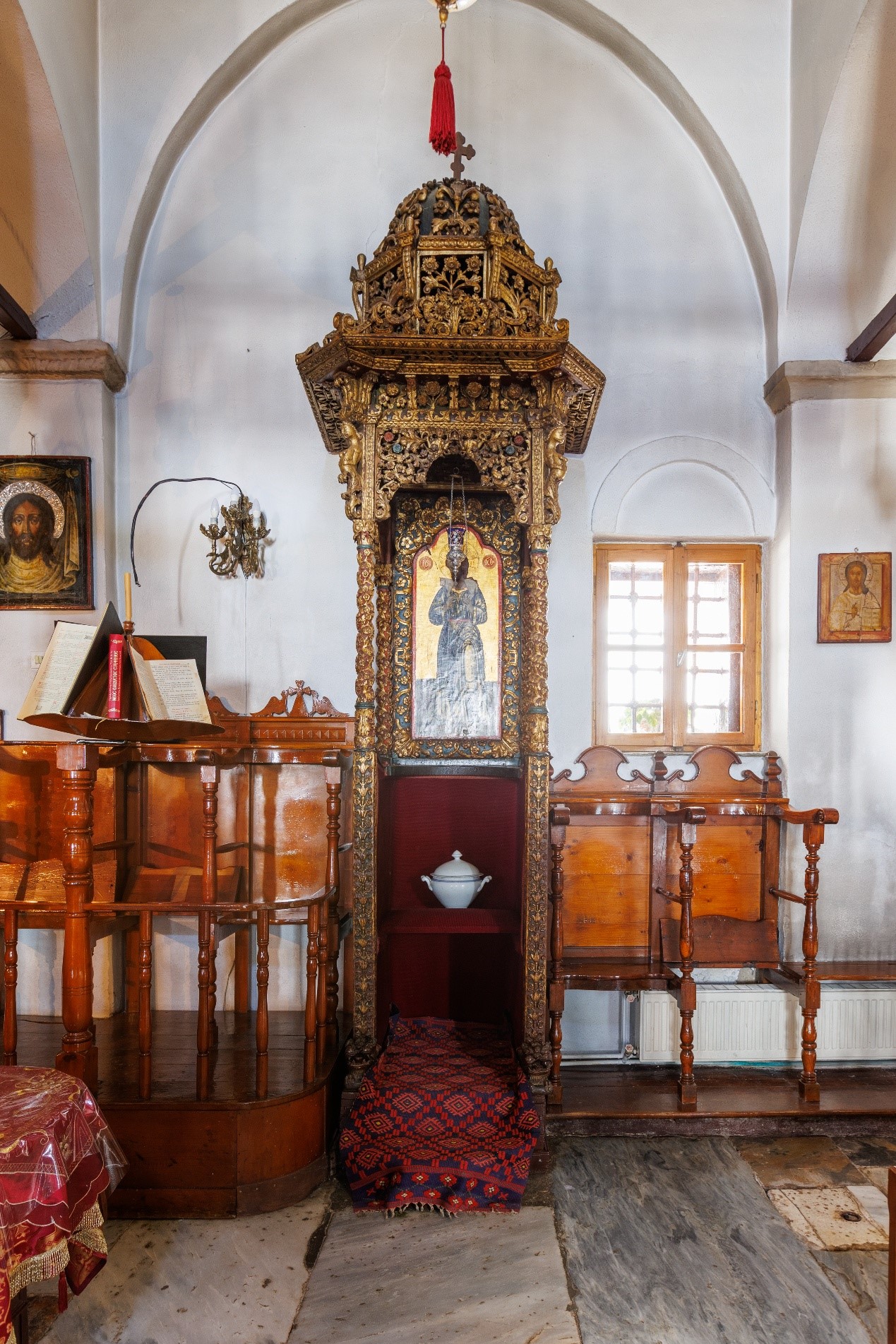
Ο ναός ανήκει στο σύνθετο τετρακίονο τύπο που ομοιάζει με τους ναούς της Κωνσταντινούπολης και στεγάζεται με πλάκες. Ο τρούλος του είναι κυλινδρικός με τυφλές κόγχες. Στα ανατολικά βρίσκονται 2 πεσσοί που στηρίζουν ένα μικρότερο τρούλο, πάνω από το ιερό. Η αψίδα του ιερού διαθέτει αρμένικα στοιχεία. Το περίτεχνο, σκαλιστό, επίχρυσο τέμπλο σκαλίστηκε στον Αίνο της Θράκης και οι εικόνες του είναι έργα της κρητικής σχολής. Σε μια από τις κρύπτες του ιερού υπάρχουν δυο μαρμάρινες πλάκες, η μια διακοσμημένη με κοχλία που φέρει επιγραφή στα ιταλικά για ένας Αρμένιο ιερές, τον Ελεζάριο (1768) και η άλλη με δικέφαλο αετό.
Γύρω από το ναό βρίσκονται πολλά παλιά παρεκκλήσιά, κτίσματα του 16ου και 17ου αιώνα, το όνομα και η ανέγερση των οποίων αναγράφεται σε σχετική μικρή πινακίδα εκτός των ναών. Στο κωδωνοστάσιο του Χριστού από τα τέλη του 18ου αιώνα ως τις αρχές του 20ου βρισκόταν η καμπάνα του Αλέξανδρου Ορλώφ, την οποία δώρισε ο ναύαρχος στη Μονή Τιμίου Ιωάννη Προδρόμου/, μετά τις σωστές οδηγίες του Σκοπελίτη πρωρέα του και την επιτυχή έκβαση της μάχης στο Τσεσμέ. Επειδή η καμπάνα ήταν δύσκολο να μεταφερθεί τότε στο μοναστήρι, τοποθετήθηκε στο κωδωνοστάσιο του Χριστού. Όταν έσπασε το στήριγμά της, στις αρχές του 20ου αιώνα, αντικαταστάθηκε από μια νέα, δωρεά του Νέστορα, η οποία και υπάρχει ακόμη. Η καμπάνα του Αλέξανδρου Ορλώφ φυλάσσεται ως σήμερα εντός του ναού.
Η εκκλησία από την αρχαιότητα ως σήμερα, δεν έπαψε ποτέ να είναι ενοριακή και χρονολογείται από τη θεμελίωση του κάστρου της Σκοπέλου τον 5ο αιώνα, περιοχή που κατοικείται από τότε ως σήμερα. Εφημέριος του ναού είναι από το 1973 έως σήμερα ο π. Νικόλαος Κασσανδριανός.
Κείμενο: Ηρώ Μελαχροινάκη
Φωτογραφίες: Δήμος Σκοπέλου
Holy Church of the Nativity of Christ
The church is a parish temple, the oldest in the town, built on the site of an ancient Greek temple. It served as the seat of a Bishopric from the 4th century, during the time of the island’s patron saint, Saint Riginos, whose relic is kept in the church. Above the church stood the Episcopal residence, the house of the respective Bishop, which was incorporated into the church and now serves as the women’s gallery (gynaikonitis).
The church follows the complex tetrakionion architectural type, resembling the churches of Constantinople, and has a stone slab roof. Its dome is cylindrical with blind conches. To the east, two piers support a smaller dome above the sanctuary. The apse of the sanctuary features Armenian elements. The ornate, carved, gilded iconostasis was crafted in Ainos of Thrace, and its icons belong to the Cretan school. In one of the crypts of the sanctuary lie two marble plaques: one is decorated with a shell and bears an inscription in Italian for an Armenian priest named Elezario (1768), and the other displays a double-headed eagle.
Around the church are many old chapels, built in the 16th and 17th centuries. Each has a small plaque outside with its name and date of construction. In the bell tower of Christ, from the late 18th to the early 20th century, hung the bell of Admiral Alexei Orlov, which he donated to the Monastery of Saint John the Baptist after the successful outcome of the Battle of Chesme, following the accurate guidance of his Skopelitis pilot. Since transporting the bell to the monastery was difficult at the time, it was placed in the bell tower of the Church of Christ. When its support broke in the early 20th century, it was replaced with a new one, a donation from Nestor, which still exists today. The bell of Orlov is preserved inside the church to this day.
The church has never ceased to function as a parish church since antiquity and dates back to the founding of the Castle of Skopelos in the 5th century, an area that has been continuously inhabited from then until today. The parish priest of the church since 1973 is Father Nikolaos Kassandrianos.
Text by: Iro Melachrinaki
Photos: Municipality of Skopelos